Showing posts with label Tao. Show all posts

Tuesday, October 9, 2012

Self . . . An 'Imaginary Center' as the 'Cause of Suffering'

"As LONG AS (one's subjective 'self') is centered in a phenomenal object, and thinks and speaks therefrom, (one's) subject is identified with that object and is bound."

"As long as such condition (applies), the identified subject can never be free—for freedom is liberation from that identification."

"Abandonment of a phenomenal centre constitutes the only 'practice', and such abandonment is not an act volitionally performed by the identified subject, but a non-­action (wu wei) leaving the noumenal centre in control of phenomenal activity, and free from fictitious interference by an imaginary 'self'."

"Are you still thinking, looking, living, as from an imaginary phenomenal center? As long as you do that you can never recognize your freedom."

Preface to "Open Secret" by Wei Wu Wei


 self / n., adj. & verb (pl. selves) 1 a person's or thing's own individuality or essence (showed his true self). 2 a person or thing as the object of introspection or reflexive action (the consciousness of self). . . .

ego / n. (pl. -os) 1 Metaphysics a conscious thinking subject. 2 Psychology the part of the mind that reacts to reality and has a sense of individuality. . . .

[Source: Concise Oxford English Dictionary.]

"(An) event," Wei Wu Wei points out, "only occurs in the mind of the perceiver of it, singular or plural as the case may be, and no event could be anything but a memory when we know it. No event is anything but a psychic experience. Events, or memories of events, are objectivizations in consciousness."

Our lives, our histories - personal and collective - the "who" we identify as, are manifestations of consciousness. Indeed, as many physicists point out, at the most basic level, the entire universe must be manifested (or "real-ized") through an act of conscious observation, through an observing consciousness. Some, like the late David Bohm, might agree with Gary Zhukav's conclusion that "modern physics has become the study of the structure of consciousness."

Buddhist teacher, Tulke Urgyen Rinpoche, would say that 'reality' ("as it is") - including the basic nature of a realized Buddha and that of ordinary sentient beings - is a fundamental and complete emptiness unified irrevocably with an infinite ability to 'cognize.' I suspect he would agree that the 'events' of our lives, and our 'memories' of those events, "are objectivizations in consciousness," albeit objectivizations that are misperceived because we are unskillful in realizing the unity of our empty and infinitely cognizant nature.

One must ask, given the 'misperceptions' of our own individual and collective group consciousness, just how functional we are as many billions of individualized 'selves.' How well does an overwhelmingly narcissistic, post-modern dualistic perspective work for us?

It is important, I feel, to realize just how much unnecessary mayhem, harm and suffering this misperception of separate individuality perpetuates if we are ever going to make the necessary efforts to be free of 'self.'

* * * * * * * * * * * * *

"(I)t becomes obvious," writes spiritual teacher, Eckhart Tolle, "that the human ego in its collective aspect as 'us' against 'them' is even more insane than the 'me,' the individual ego, although the mechanism is the same. By far the greater part of the violence that humans have inflicted on each other is not the work of criminals or the mentally deranged, but of normal respectable citizens in the service of the collective ego. One can go as far as to say that on this planet 'normal' equals insane. What is it that lies at the root of this insanity? Complete identification with thought and emotion, that is to say, ego."

Eckhart Tolle, best-selling author of
"The Power of Now" and "A New Earth."
"Greed, selfishness, exploitation, cruelty, and violence are still all-pervasive on this planet," Tolle observes. "When you don't recognize them as individual and collective manifestations of an underlyin dysfunction or mental illness, you fall into the error of personalixing them. You construct a conceptual identity for an individual or group and you say: 'This is who he is. This is who they are.'"

"All this," he notes, "is enormously satisfying to the ego. It strengthens the sense of separation between yourself and the other, whose 'otherness' has become manifested to such an extent that you can no longer feel your common humanity, not the rootedness in the one Life that you share with each human being, your common divinity."

And, he points out: "Fighting (such) unconsciousness will (only) draw you into unconsciousness yourself. Unconscious, dysfunctional egoic behavior can never be defeated by attacking it. Even if you defeat your opponent, the unconsciousness will simply have moved into you, or the opponent reappears in a new disguise. Whatever you fight, you strengthen, and what you resist, persists." (Emphasis added.)

Eckhart Tolle, "A New Earth: Awakening to Your Life's Purpose," pp. 73-75

As Wei Wu Wei asks: ""Are you still thinking, looking, living, as from an imaginary phenomenal center?" "As long as you do that," he points out, "you can never recognize your freedom."

Friday, September 30, 2011

Dying to Self

He who knows men is clever;
He who knows himself has insight.
He who conquers men has force;
He who conquers himself is truly strong.

He who knows when he has got enough is rich,
And he who adheres assiduously to the path of Tao is a
      man of steady purpose.
He who stays where he has found his true home
      endures long,
And he who dies but perishes not enjoys real longevity.

-- Lao Tzu --
("Tao Te Ching")

Verse 33 from the Tao Te Ching, above, like teachings from all the world's great wisdom traditions, identifies the great metaphysical challenge for all men and women: to know, and then overcome, their own narrow "selves." For in every one of us a separate ego-self arises, but in only a very select few is it overcome.

"It is by self-forgetting," St. Francis of Assisi affirmed, "that one finds. . . . It is by dying (to self) that one awakens to Eternal Life." Or, as Lao Tzu put it, "(H)e who dies but perishes not enjoys real longevity." Thus, not only is being born a second time a great spiritual goal, but perhaps more so is dying to one's self while remaining in the world.  It is the loftiest of goals, only to be achieved by disciplining the mind that has created the second self of the ego.

Monday, September 26, 2011

The Tao of Non-Resistance

The spiritual path is a path of non-resistance - i.e., a way of accepting what is. In electronics, a resistor heats up, and if it isn't cooled off it is liable to burn out and fail. A conductor, on the other hand, allows the current to flow through it. The best conductors are those that exhibit the least resistance. The sage allows circumstances to flow in, around, and through him and, in turn, flows through life without resistance. That, the following suggests, is the secret of acting in accordance with the Tao.

* * * * * * * * * * * * *

      Act through nonaction.
      Handle affairs through noninterference,
      Taste what has no taste,
      Regard the small as great, the few as many,
      Repay resentment with integrity.

      Undertake difficult tasks
            by approaching what is easy in them;
      Do great deeds
            by focusing on their minute aspects.

      All difficulties under heaven arise from what is easy,
      All great things under heaven arise from what is minute.

For this reason,
      The sage never strives to do what is great.
Therefore,
       He can achieve greatness.

      One who lightly assents
            will seldom be believed;
      One who thinks everything is easy
            will encounter much difficulty.

For this reason,
      Even the sage considers things difficult.
Therefore,
      In the end he is without difficulty.

[Lao Tzu, "Tao Te Ching," Victor H.  Mair trans., p. 33.]

Thursday, September 22, 2011

On the "Great Way" - The Tao of Nature

There was something featureless yet complete,
      born before heaven and earth;

Silent - amorphous -
      it stood alone and unchanging.

We may regard it as the mother of heaven and earth.
Not knowing its name,
      I style it the "Way."

If forced to give it a name,
      I would call it "great."

Being great implies flowing ever onward,
Flowing ever onward implies far-reaching,
Far-reaching implies reversal.

The Way is great,
Heaven is great,
Earth is great,

The king, too, is great.

Within the realm there are four greats,
      and the king is one among them.


Man
      patterns himself on earth,
Earth
      patterns itself on heaven,
Heaven
      patterns itself on the Way,
The Way
      patterns itself on nature.

(Lao Tzu, "Tao Te Ching," Victor H. Mair trans., p. 90.)

Thursday, September 15, 2011

Thich Nhat Hanh: On Habit and Mindfulness

"Our habit energy is what causes us to repeat the same behaviour thousands of times. Habit energy pushes us to run, to always be doing something, to be lost in thoughts of the past or the future and to blame others for our suffering. And that energy does not allow us to be peaceful and happy in the present moment."

"The practice of mindfulness helps us to recognize that habitual energy. Every time we can recognize the habitual energy in us, we are able to stop and to enjoy the present moment. The energy of mindfulness is the best energy to help us embrace our habit energy and transform it."

-- Thich Nhat Hanh --
("Beyond the Self: Teachings on the Middle Way")

In the Tao Te Ching we read:

The sage has no mind of his own. He takes as his own the mind of the people.

Those who are good I treat as good. Those who are not good I also treat as good. In so doing I gain in goodness. Those who are of good faith I have faith in. Those who are lacking in good faith I also have faith in. In so doing I gain in good faith.

The sage in his attempt to distract the mind of the empire seeks urgently to muddle it. The people all have something to occupy their eyes and ears, and the sage treats them all like children.


* * * * * * * * * * * * *

In the attached two-part video, the renowned Buddhist teacher, Thich Nhat Hanh, takes the viewer through a mindful movement and breathing meditation:


Wednesday, September 14, 2011

Thomas Merton: Eastern Musings

The Lion
 
From alien heavens
Where there are no fabled beasts
No friendly histories
And passion has no heraldry.

I have nothing left to translate
Into the figures of night
Or the pale geometry
Of the fire-birds.
If I once had a wagon of lights to ride in
The axle is broken
The horses are shot.

-- Thomas Merton --


The iconoclasitic Benedictine Monk, Thomas Merton, was above all a poet, a poet who shook his worldview loose from old forms, as The Lion, above, amply demonstrates. The spare, stark images of the wagon of lights, the broken axle, and horses that have been shot suggest the growing influence that Zen and Taoism had on his worldview, an influence that can be seen in the following selections about Nothingness and the Void taken from his later work, "Cables to the Ace."

"For (Merton) solitude was his desert where he had to face death and Nothingness. As he explored the Asian religious traditions in the 1960s, he sought to integrate this Nothingness into his Christian theology. Buddhism and Taoism had long found in Nothingness or the Void a creative, even joyful, reality that was in harmony with Being. But Western thought only recently began to face the challenge of Non-being." -- Alan Altany --

(For more of Alan Altany's informative and delightful summary of Merton's poetry, see "Thomas Merton's Poetry: Emblems of a Sacred Season," on the thomasmerton.org website.)


Monday, August 29, 2011

Lower Self, Higher Self, No Self

Thirty spokes join at the hub;
their use for the cart
is where they are not.


When the potter's wheel makes a pot,
the use of the pot
is precisely where there is nothing.


When you open doors and windows for a room,
it is where there is nothing
that they are useful to the room..


Therefore being is for benefit,
Nonbeing is for usefulness.

-- Lao Tzu --
("The Essential Tao")
* * * * * * * * * * * * *

"The image of the wheel that is not too tight on its axle and not too loose," says Allan Watts, "that is really with the axle, is the Zen principle of not being attached, not being sticky. It is very difficult for us to function in that way," he points out, "because we have been brought up to believe that there are two sides to ourselves. - one the animal side, and the other the human and civilized side."

"These are expressed," he observes, "in what Freud calls 'the pleasure principle' which he classifies with the animal side, the Id, and the other the 'reality principle' which he puts on the side of society and the Super-Ego. And man is so split, that he is in a constant fight between these two."

"Theosophists," Watts notes, "sometimes speak of our having two selves: the Higher Self which is spiritual, and the lower self which is merely psychic - the ego. And therefore the problem of life is to make one self, the higher one, take hold of the other like a rider takes charge of a horse."

"(However) in Zen," he points out,  "a duality between higher self and lower self is not made. Because if you believe in the higher self, this is a simple trick of the lower self. If you believe that there really is no lower self, that there is only the higher self but that somehow or other the higher self has to shine through, the very fact that you think it has to try to shine through still gives validity to the lower self."

On the other hand, he notes: "If you think you have a lower self or an ego to get rid of and then you fight against it, nothing strengthens the delusion that it exists more than that. So this tremendous schizophrenia amongst human beings of thinking that they are rider and horse, soul in command of body, or will in control of passions wrestling with them, all that kind of split thing simply aggravates the problem and we get more and more split."

"And so," he points out, "we have all sorts of people engaged in an interior conflict which they will never ever resolve. Because the true self, either you know it or you don't. If you do know it, than you  know that it is the only one, and the other so-called lower self just ceases to be a problem. It becomes something like a mirage, and you don't go around hitting them with a stick or putting reins on them, you just know that they are mirages and walk straight through them."

* * * * * * * * * * * * *

Monday, August 22, 2011

Chuang Tzu and the Butterfly

Blessed are those who are humbled by life, for they may become meek. Blessed are the meek, for they are free of self. When we are suffering, we are being humbled, and in being humbled we are actually being blessed although it does not feel like it at the time.
"We each have a view of the universe," notes Thich Nhat Hahn. "That view may be called relativity or uncertainty or probability or string theory; there are many kind of views."

"Its okay to propose views," he notes, "but if you want to make progress on the path of inquiry, you should be able to be ready to throw away your view."

Chuang Tzu, the great Taoist master, was so amenable to changing his views of the ultimate 'realities' of life that he awoke from a dream unsure if he had been Chuang Tzu dreaming he had been a butterfly, or if he was then a butterfly dreaming that he was Chuang Tzu.

"If you worship something as a dogma, as absolute truth," Thich Nhat Hahn points out, "you are not a good practitioner. You must be totally free, even from the teachings of the Buddha. The teachings of the Buddha," he notes, are offered as instruments, not as absolute truth."

To the extent that I 'know' the truth I suffer, for I have not yet become truly humble. Yet, how often am I caught up in my view of what is 'right' and what is 'wrong'? Far too often, as it turns out, for I continue to suffer the pangs of my own 'righteousness.'

My spiritual mentor often told the following story:
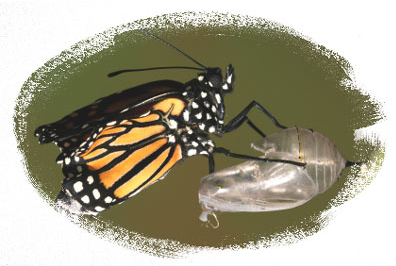
"One day a man saw a butterfly shuddering on the sidewalk, locked in a seemingly hopeless struggle to free itself from its now useless cocoon. Feeling pity, the man took a pocket knife and carefully cut away the cocoon to set the butterfly free. To his amazement, it lay on the sidewalk, convulsed weakly for a while and died. Sometime later a biologist told him, "That was the worst thing you could have done. A butterfly needs that struggle in order to develop its muscles to fly. By robbing him of the struggle you made him too weak to live."
Never deny another of there struggle to be free. Do not rob them of the opportunity to be humbled by life. We all need to fulfill our own karma.

You do not have to reassure Chuang Tzu, that he is indeed Chuang Tzu. You may be mistaken. He may, in fact, be a butterfly dreaming that he is just Chuang Tzu.

"The truly Right View," notes Thich Nhat Hahn, "is the absence of all views. According to the teachings of the Buddha, we have to throw away all views, including the so-called right views. Reality, things as they are, cannot be described in terms of notions and views. That is why so-called 'right views' are only instruments to help us."

[Thich Nhat Hahn, "Beyond the Self," pp. 14-15.]

Saturday, August 20, 2011

The Tao of Understanding and Mystery

"The ways that can be walked are not the eternal Way;
The names that can be named are not the eternal name.
The nameless is the origin of the myriad creatures;
The named is the mother of the myriad creatures."

"Therefore,
      Always be without desire
          in order to observe its wondrous subtleties:
      Always have desire
         so that you may observe its manifestations."

"Both of these derive from the same source;
They have different names but the same designation."

"Mystery of mysteries,
The gate of all wonders!"

-- Tao Te Ching, Verse 45 --

* * * * * * * *

 "The one who understands Heaven and understands the ways of humanity has perfection," writes Chuang Tzu. "Understanding Heaven, he grows with Heaven. Understanding humanity, he takes the understanding of what he understands to help him understand what he doesn't understand, and so fulfills the years Heaven decrees without being cut off in his prime. This is known as perfection."

"However, it is true that there are problems," he notes. "Real understanding has to have something to which it is applied and this something is itself uncertain. So how can I know that what I term Heaven is not human? Or that what I call human is not Heaven?"

"Only the true man has understanding," Chuang Tzu points out. "So what is a true man? The true man of old did not fight against poverty, nor did he look for fulfillment through riches - for he had no grand plans. Therefore, he never regretted any failure, nor exulted in success. He could scale the heights without fear, plumb the depths without difficulties, and go through fire without pain. This is the kind of person whose understanding has lifted him up towards the Tao."
-- Chuang Tzu, "The Tao of Nature, p. 27 --

* * * * * * * * * * * * *


Friday, August 5, 2011

Thomas Merton: 'The Birth of Man'

"Is there to be found on earth a fullness of joy, or is there no such thing? Is there some way to make life fully worth living, or is this impossible? If there is no such a way, how do you go about finding it? What should you try to do? What should you seek to avoid? What should be the goal in which your activity comes to rest? What should you accept? What should you refuse to accept? What should you love? What should you hate?"


-- Thomas Merton --
("Thoughts On the East," p. 16)
  
"The whole world recognizes the beautiful as the beautiful, yet this is only the ugly; the whole world recognizes the good as the good, yet this is only the bad.
     Thus Something and Nothing produce each other;
     The difficult and the easy complement each other;
     The long and the short offset each other;
     The high and the low incline towards each other;

     Before and after follow each other.
Therefore the sage keeps to the deed that consists in taking no action and practices the teaching that uses no words.
     The myriad creatures rise from it yet it claims no authority;

     It gives them life yet claims no possessions;
     It benefits them yet exacts no gratitude;
     It accomplishes its task yet claims to no merit.
It is because it lays claim to no merit
     That its merit never deserts it."


-- Lao Tzu --
( "Tao Te Ching," Verse II)
* * * * * * * * * * * * * 
Taoism emphasizes balance. The feminine balances the masculine; rigidity balances suppleness; the yin balances the yang, and because of this everything returns to a certain equanimity, to the ease of being that lies in the center.
When there is an imbalance the world does not recognize the beautiful as beautiful, the good as good, or the bad as bad. Yet this is bound to be temporary, for everything is bound to return to the balance of equanimity that is the nature of the Tao. 

We are, it would appear, in a world that is out of balance; thus, as so many wisdom traditions note, we are in the process of returning - in this instance, returning to a center where there must be harmony between yin and yang, between man and nature, between the manifest and the unmanifest.
* * * * * * * * * * * * *
"What the world values is money, reputation, long life, achievement. What it counts as joy is health and comfort of body, good food, fine clothes, beautiful things to look at, pleasant music to listen to."

"What it condemns is lack of money, a low social rank, a reputation for being no good, and an early death."

"What it considers misfortune is bodily discomfort and labor, no chance to get your fill of good food, not having good clothes to wear, having no way to amuse or delight the eye, no pleasant music to listen to. If people find that they are deprived of these things, they go into a panic or fall into despair. They are so concerned for their life that their anxiety makes life unbearable, even when they have the things they think they want. Their very concern for enjoyment makes them unhappy."

"The rich make life intolerable, driving themselves in order to get more and more money which they cannot really use. In so doing, they are alienated from themselves, and exhaust themselves in their own service as though they were slaves of others."

"The ambitious run day and night in pursuit of honors, constantly in anguish about the success of their plans, dreading the miscalculations that may wreck everything. Thus they are alienated from themselves, exhausting their real life in service of the shadow created by their insatiable hope."

"The birth of man is the birth of his sorrow."


-- Thomas Merton --
("Thoughts On the East," pp. 16-17.)


Thursday, August 4, 2011

Thomas Merton: On the 'Tao'

"The Tao, in the broadest sense, is the way the universe functions, characterized by spontaneous creativity or by regular alterations of phenomena (such as day followed by night) that proceed without effort."

"Effortless action can be seen in the conduct of water, which unresistingly accepts the lowest level yet wears away the hardest substance. Human beings following the Tao, must abjure all struggle  and learn the value of wu-wei (non-striving) through which one approaches a stage of creative possibility sometimes symbolized as a child or infant in Taoist writings."

"In a rough sense, what sin is to the Christian, cosmic disorder (or, at the local level, personal anxiety) is to the Taoist. The ideal state of being, fully attainable only by mystical contemplation, is simplicity and freedom from desire, comparable to that of "an uncarved block.""
[Thomas Merton ,"Thoughts On The East," p. 10.]
* * * * * * * * * * * * * 
Know the masculine,
Keep to the feminine,
And be the Brook of the World.
To be the Brook of the World is
To move constantly in the path of Virtue
Without swerving from it,
And to return again to infancy.

Know the white,
Keep to the black,
And be the Pattern of the World.
To be the Pattern of the World is
to move constantly in the path of Virtue
Without erring in a single step,
And to return again to the Infinite.

Know the glorious,
Keep to the lowly,
And be the Fountain of the World.
To be the Fountain of the World is
To live the abundant life of Virtue,
And to return again to Primal Simplicity.

When Primal Simplicity diversifies,
It becomes useful vessels.
Hence the greatest cutting
Does not sever.


* * * * * * * * * * * * *

The highest form of goodness is like water.
Water knows how to benefit all things without striving with them.
It stays in places loathed by all men.
Therefore, it comes from the Tao.

In choosing your dwelling, know how to keep to the ground.
In cultivating your mind, know how to dive in the hidden depths.
In dealing with others, know how to be gentle and kind.
In speaking, know how to keep your words.
In governing, know how to maintain order.
In transacting business, know how to be efficient.
In making a move, know how to choose the right moment.

If you do not strive with others,
You will be free from blame.


* * * * * * * * * * * *
[Lao Tzu, "Tao Teh Ching," Nos. XXVIII and VIII.]

Wednesday, August 3, 2011

The Sage and the Tao

The "Tao" is "the Way" - the way of all things, the fundamental principle of the universe. The feminine and the masculine meet in the Tao, yin meets yang in the Tao, the Four Cardinal Directions meet in the center, and this center is the Tao. He who knows the Tao, knows his own Being and the Way of all things.

"The sage has the sun and moon by his side. He grasps the universe under his arm. He blends everything into a harmonious whole, casts aside whatever is confused or obscured, and regards the humble as honourable."
-- Chuang Tse --

"If it

      is bent,
          it will be preserved intact;
     is crooked,
          it will be straightened;
     is sunken,
          it will be filled;
     is worn-out,
          it will be renewed;
     has little;
          it will gain;
     has much,
          it will be confused.

For these reasons,
     The sage holds on to unity
          and serves as the shepherd of all under heaven.

     He is not self-absorbed,
          therefore he shines forth;
     He is not self-revealing,
          therefore he is distinguished;
     He is not self-assertive,
          therefore he has merit;
     He does not praise himself,
          therefore he is long-lasting.

Now,
     Simply because he does not compete,
          no one can compete with him.

     The old saying about the bent being preserved intact
          is indeed close to the mark!

     Truly, he shall be returned intact."


-- Lao Tzu --